

With a processing capacity of 1-1.2 tons per hour, a cutting percentage of up to 95%, and a broken kernel percentage of less than 3%, PSL Machinery’s 8-knife cutting technology represents a new approach to high-performance cashew shelling.
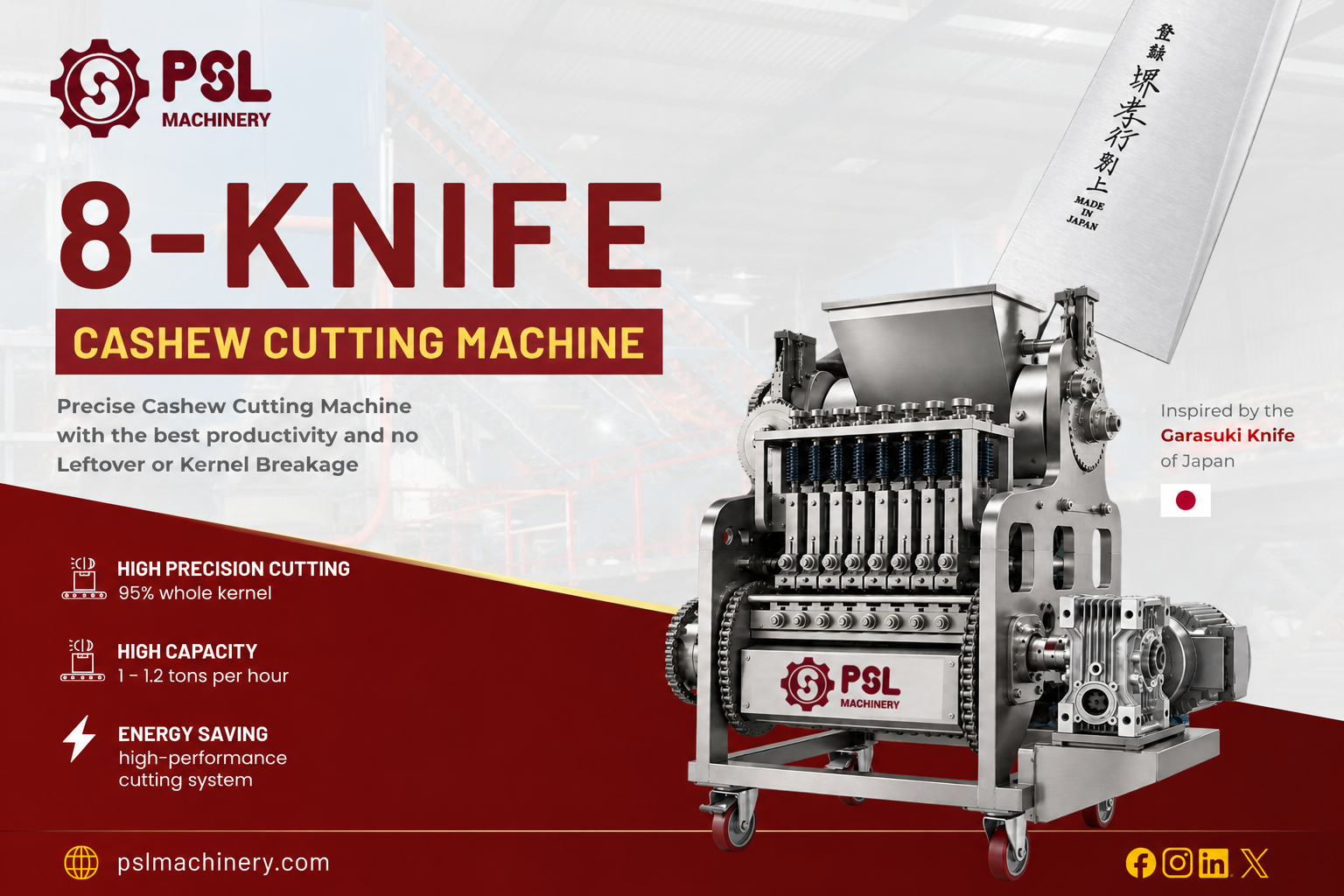
The shelling and cutting stage is one of the most critical processes in a cashew processing line. A small variation in cutting accuracy can lead to uncut nuts, damaged kernels, unnecessary material losses, and higher operational costs. For processors operating at an industrial scale, improving cutting performance by even a small percentage can create a significant difference in overall production value.
This is why PSL Machinery has developed its proprietary 8-Knife Cashew Cutter Heads, an advanced cutting technology designed to combine high capacity, exceptional cutting accuracy, low kernel breakage, durability, and energy efficiency.
More than a conventional industrial machine, it is the result of carefully engineered material flow, precision machining, durable steel components, optimized blade design, and decades of experience in the cashew processing industry.
A Proprietary Technology Designed for High-Performance Cashew Processing
PSL Machinery’s proprietary 8-knife cashew cutter heads. The technology is designed to process large volumes of raw cashew nuts while maintaining consistent cutting performance.
One of the key advantages of the system is its optimized nut rotation mechanism. The internal components responsible for rotating and feeding the cashew nuts have been specifically engineered to guide the material flow toward the cutting blades more efficiently. By improving the speed and consistency at which nuts are delivered to the cutting area, the cashew machine can achieve a high processing capacity without compromising cutting precision.
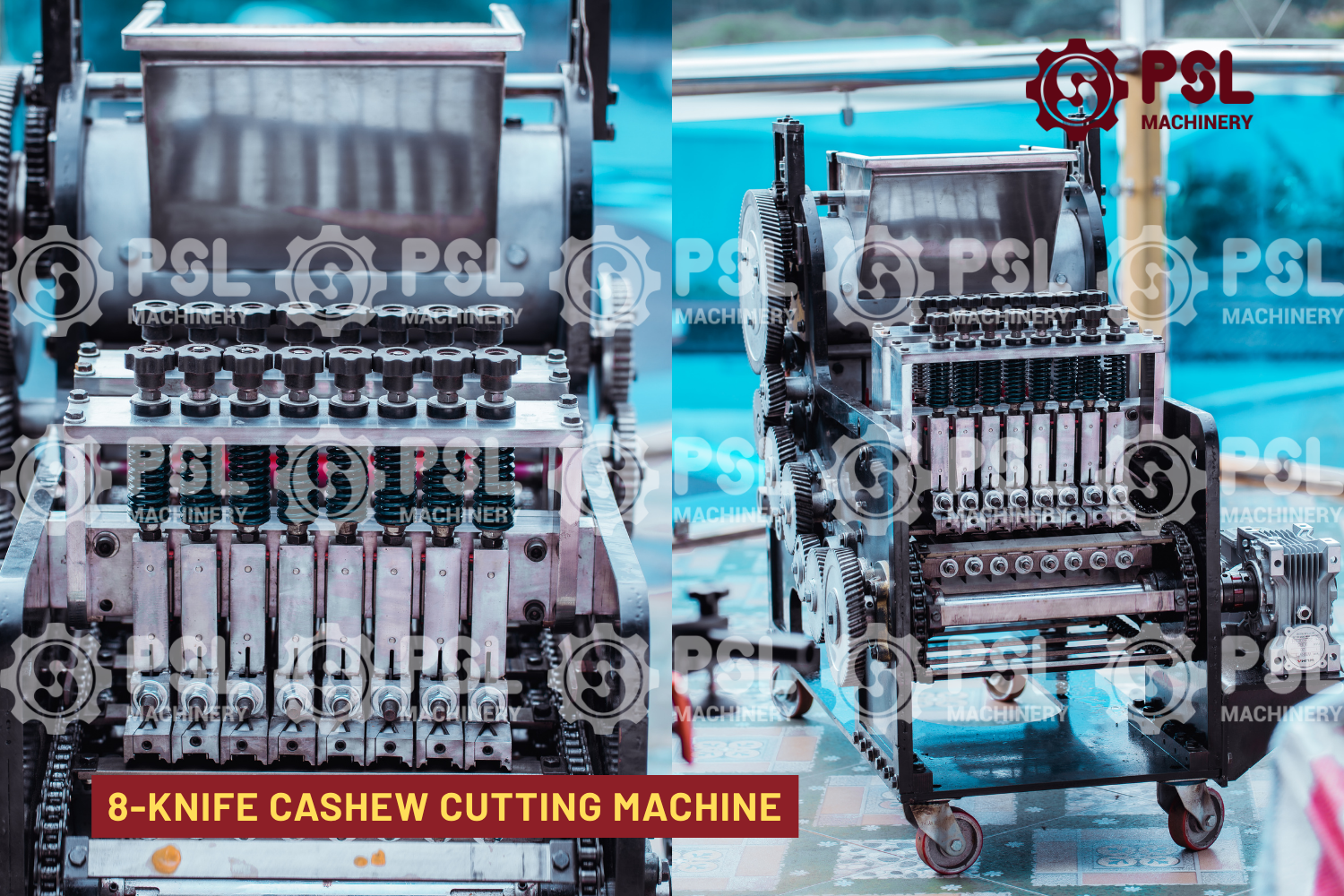
This combination of speed and control is essential in modern cashew processing. Increasing cashew machine speed alone does not necessarily improve factory productivity. If the feeding system becomes unstable, higher speeds can result in more uncut nuts, greater kernel damage, and inconsistent output.
PSL Machinery’s engineering approach focuses on balancing throughput with precision. Each stage of the cutting process, from feeding and nut positioning to blade contact and material discharge, is designed to operate as part of a synchronized system.
As a result, the 8-knife cutter heads can achieve a capacity of 1-1.2 tons per hour, making the technology suitable for large-scale cashew processing factories seeking higher productivity and stable operational performance.
Up to 95% Cutting Performance with Low Kernel Breakage
High processing capacity is only valuable when it is supported by strong kernel recovery and low breakage.
PSL Machinery’s proprietary cutting technology is designed to achieve a cutting percentage of up to 95%, while keeping the broken percentage below 3% under the appropriate operating conditions.
The performance is supported by several precision-engineered components working together. The nut receiving slots are designed with carefully controlled dimensions to improve the positioning of each cashew nut before it reaches the cutting blade. Accurate positioning is essential because inconsistent nut orientation can result in incomplete cuts or direct damage to the kernel.
By improving the accuracy of nut rotation and presentation, the system helps ensure that each nut reaches the blade in the correct position. In addition, key components are treated with a chrome coating that helps reduce the adhesion of cashew nut shell liquid and other processing residues. This contributes to a cleaner operating environment and supports more stable material flow throughout continuous production. The cutting blades themselves are manufactured from high-strength steel with carefully selected hardness and elasticity properties.
This combination allows the blade to maintain a sharp cutting edge while providing the mechanical resilience required for continuous industrial operation. The objective is not simply to cut through the shell. The objective is to open the shell precisely while protecting the kernel inside. This distinction is critical because the value of cashew kernels varies significantly depending on the level of breakage.
Whole kernels generally command a higher market value than broken grades. Reducing unnecessary breakage during shelling can therefore directly improve the commercial value generated from each batch of raw cashew nuts.
Consistent Shelling Performance Across Different Cashew Grades
Raw cashew nuts vary in size, shape, shell characteristics, and processing conditions. A reliable industrial cutting system must therefore deliver stable performance across different grades of material. PSL Machinery’s cutting technology is designed to achieve strong shelling performance across multiple cashew grades.
For Grade A, the first shelling stage can achieve leftover levels below 8% and kernel breakage below 2%. During the second shelling stage, the remaining leftover can be reduced to approximately 1–3%.
For Grade B, the first shelling stage can maintain leftover levels below 10%, with breakage below 3%, while the second shelling stage can process the remaining material to approximately 3–5% leftover.
For Grade C and Grade D cashews, the first shelling stage is designed to maintain leftover levels below 12% and breakage below 4%, depending on raw material characteristics and factory operating conditions.
These figures demonstrate why cutting technology must be evaluated as part of the entire production process rather than by machine capacity alone.
Raw material quality, nut calibration, steaming conditions, moisture levels, operator settings, and maintenance procedures all influence the final shelling results. PSL Machinery, therefore, approaches cashew processing as an integrated production system in which machinery, process parameters, and technical expertise work together to maximize performance.
Built with Luxury Industrial-Grade Materials for Long-Term Durability
A cashew cutting machine operates under demanding mechanical conditions. Continuous nut feeding, blade movement, shell resistance, exposure to cashew shell liquid, and extended production hours all place significant stress on machine components. For this reason, durability has been a core principle in the development of PSL Machinery’s 8-knife cutter heads.
The cashew cutting machine is designed with key load-bearing components manufactured from solid stainless steel, with high-precision CNC machining used to ensure accurate dimensions and consistent mechanical performance. Precision manufacturing is particularly important for moving components.
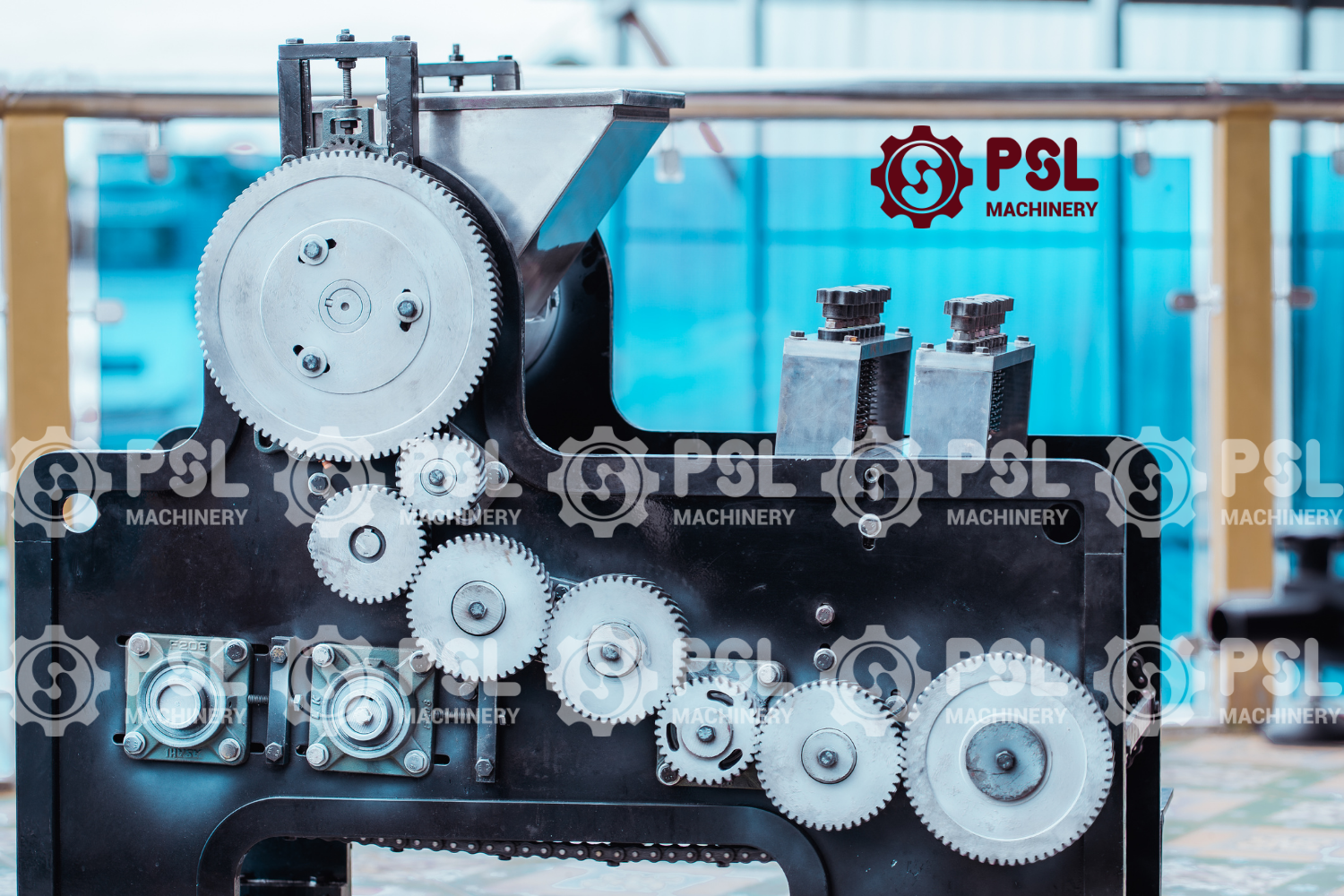
Even small dimensional inconsistencies can create misalignment, excessive wear, vibration, or instability during operation. By applying precision CNC machining to critical parts, PSL Machinery improves component accuracy and supports more stable long-term operation.
The feeding chamber shaft is manufactured from a high-quality aluminum alloy and finished with a chrome coating to reduce material adhesion and improve resistance during continuous processing. The brush components are designed using high-quality bristles selected for reduced wear and longer service life.
The result is a cutting system engineered not only for initial performance but also for durability over extended production cycles. For cashew factory owners, cashew machine durability is directly connected to operational economics. More reliable equipment can help reduce unexpected downtime, maintenance frequency, replacement costs, and production interruptions.
Easier Blade Maintenance and Operational Control
Cashew Machine performance depends not only on engineering but also on how easily the equipment can be maintained and operated. PSL Machinery’s 8-knife cutter heads are designed with a sliding mechanism that allows the blade bearing assembly to be separated more conveniently during maintenance.
This makes blade removal, installation, inspection, and servicing easier for technical teams. Reducing maintenance complexity can help factories improve equipment availability and minimize unnecessary production downtime.
The system also allows operators to adjust machine speed through a variable frequency drive. This provides greater flexibility when coordinating the cutting machine with other stages of the production line. Production conditions are not always identical.
Raw material characteristics, factory capacity, upstream processing speed, and downstream equipment performance may vary. Adjustable machine speed enables operators to better synchronize production and maintain a more balanced material flow across the factory.
This level of operational control is particularly valuable in integrated cashew processing lines, where the performance of one machine directly affects the efficiency of the entire system.