

China has officially opened its market to cashew nuts from all African countries that maintain diplomatic relations with China, marking one of the most significant developments in the global cashew industry in recent years. Effective June 9, 2026, the new policy removes long-standing trade barriers and creates broader market access for African exporters to one of the world’s largest consumer markets.
For Africa, which produces more than half of the world’s raw cashew nuts, this decision represents far more than a trade policy update. It creates new opportunities for local value addition, export expansion, and investment in modern cashew processing infrastructure. As demand from China continues to grow, processors capable of supplying high-quality kernels will be well-positioned to benefit from this changing market landscape.
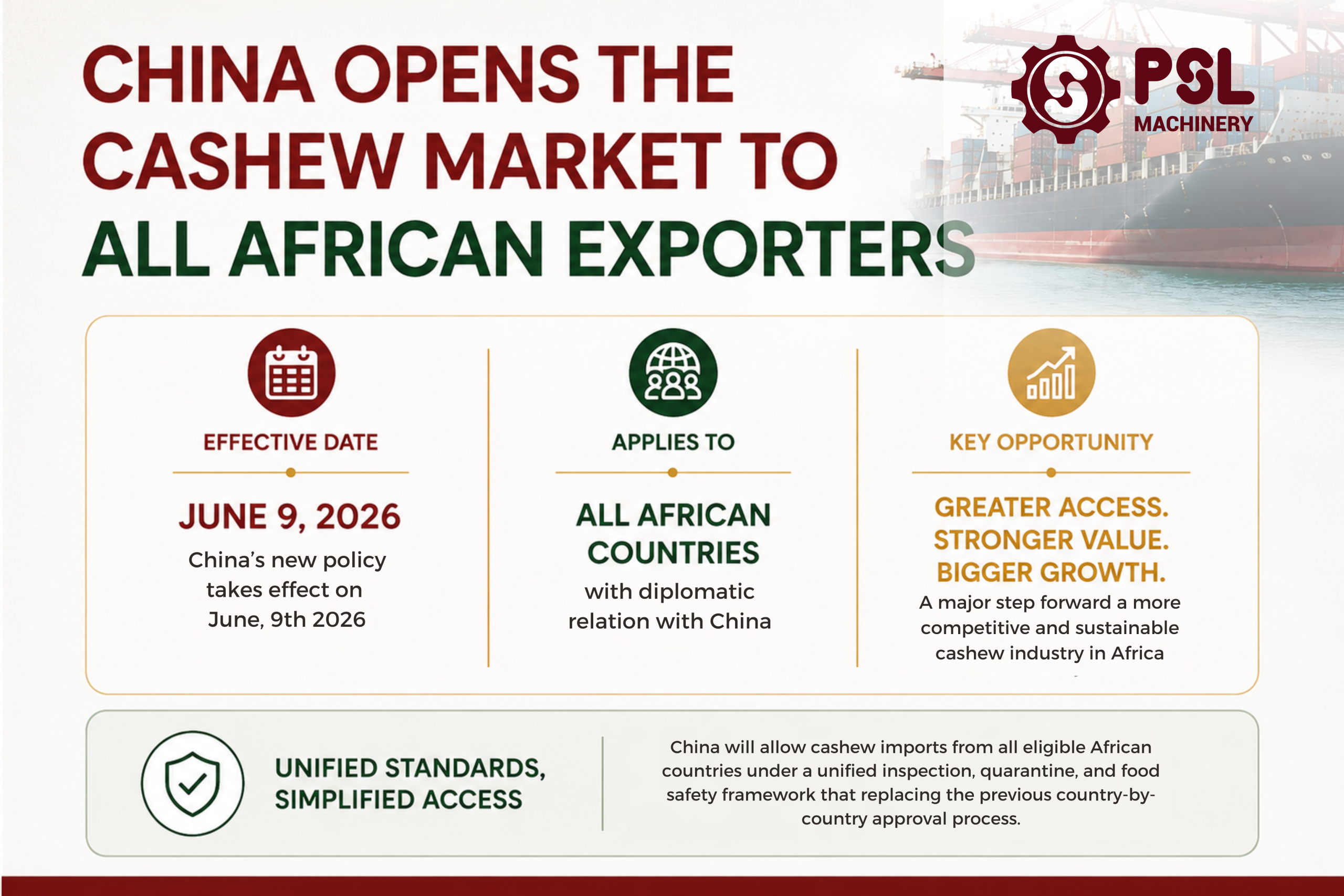
China Simplifies Cashew Imports from Africa
Under the new framework, China will allow cashew imports from every African country that maintains diplomatic relations with Beijing, provided exported products comply with unified inspection, quarantine, and food safety regulations.
Previously, exporters often needed individual country-specific approvals before accessing the Chinese market. The introduction of a standardized import framework significantly simplifies market entry, reduces administrative barriers, and creates a more predictable export environment for African businesses.
This policy is expected to strengthen trade relations between China and Africa while improving export opportunities for cashew-producing countries across the continent.
The impact of this policy on the African cashew industry
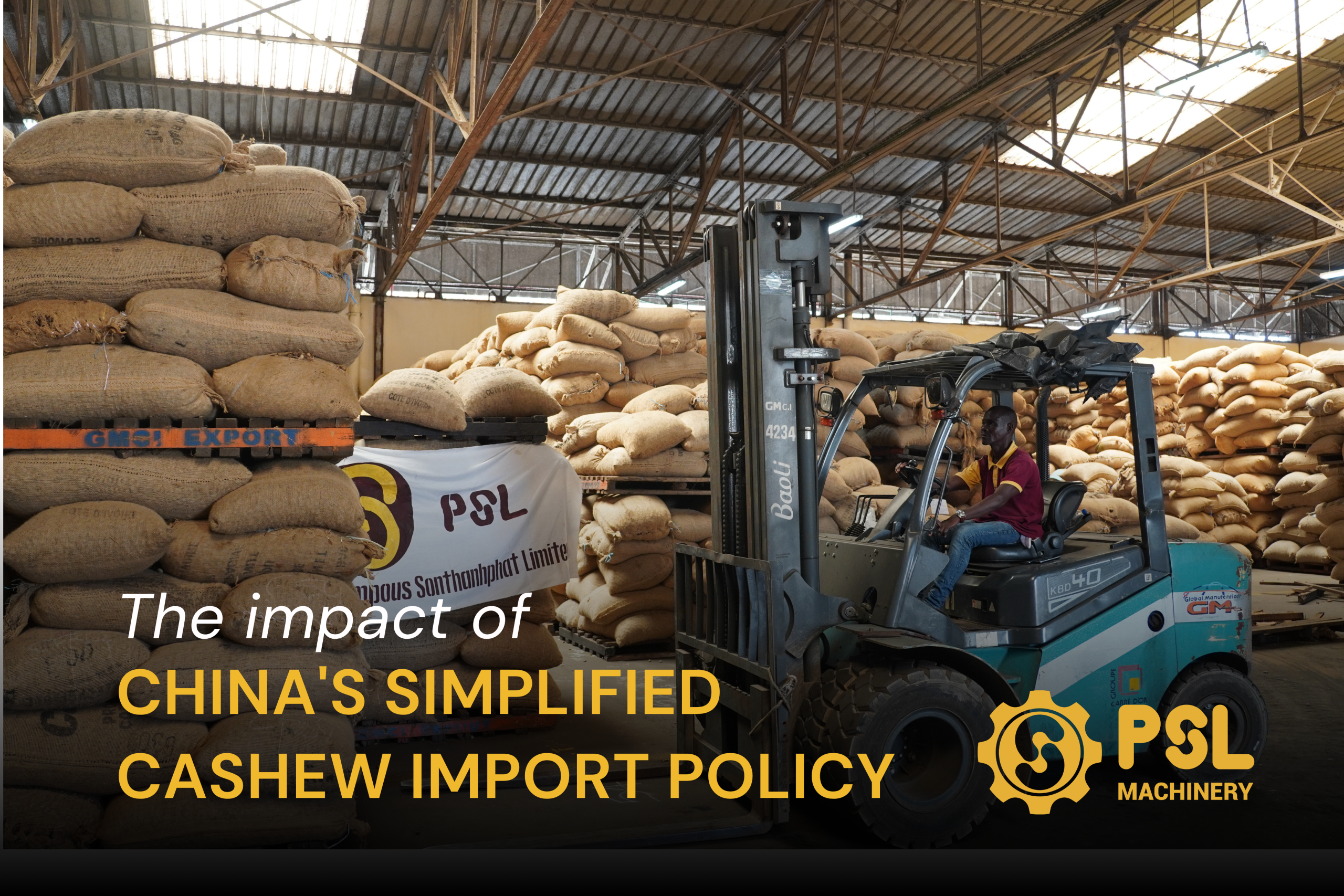
Africa already accounts for the majority of global raw cashew nut production, yet much of its harvest continues to be exported without processing. The opening of the Chinese market provides a powerful incentive for governments, processors, and investors to accelerate local value addition rather than relying solely on raw nut exports.
By increasing domestic processing capacity, African countries can export higher-value cashew kernels instead of raw cashew nuts, generate more employment throughout the value chain, improve income opportunities for farming communities, and strengthen their position within the global cashew industry.
This shift aligns with the broader trend of relocating cashew processing closer to raw material sources, allowing producing countries to capture greater economic value while reducing dependence on overseas processing hubs.
Modern Cashew Processing Is Becoming More Important Than Ever
While improved market access opens up new export opportunities, long-term competitiveness depends on the ability to consistently supply high-quality products that meet international standards.
To compete successfully in the Chinese market, processors must invest in advanced cashew processing machinery, maintain strict quality control throughout production, comply with international food safety and quarantine requirements, and optimize cashew factory efficiency to ensure stable output and competitive operating costs.
As export opportunities continue to expand, modern cashew processing technology is becoming a strategic requirement rather than an optional investment.
Building Export-Ready Cashew Factories
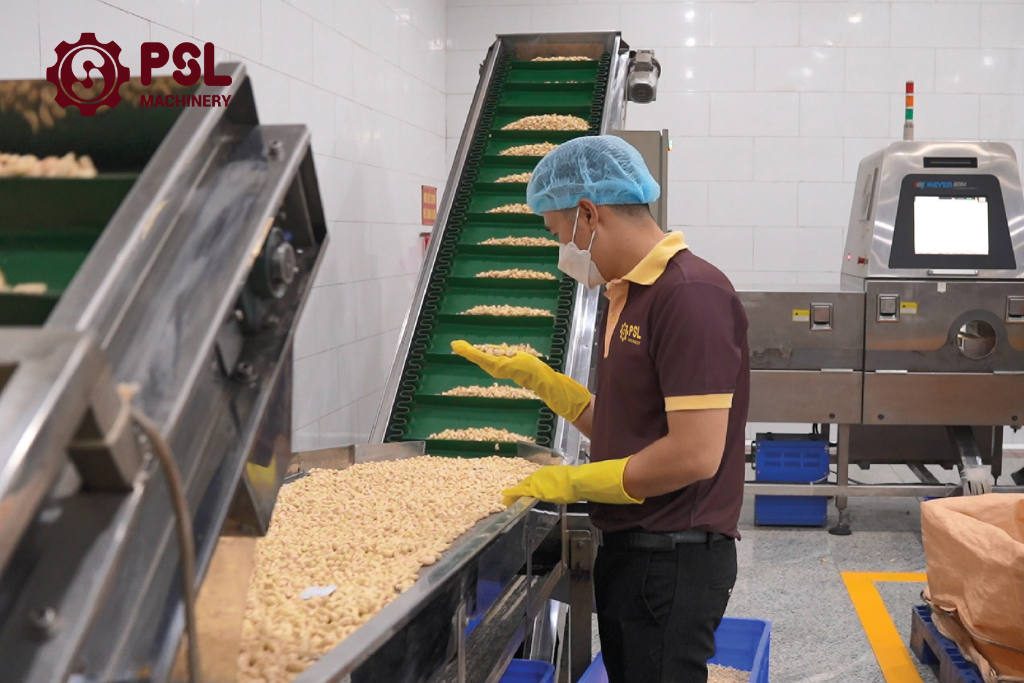
Growing international demand is expected to drive new investment in cashew processing facilities throughout Africa. Successful factories require more than individual machines.
Investors need cashew integrated solutions covering cashew factory planning, cashew production line design, engineering, installation, workforce training, technology transfer, and long-term operational support.
A complete cashew processing factory enables processors to maximize kernel recovery, improve product consistency, reduce production costs, and meet the quality expectations of international buyers.
How to Build a Profitable Cashew Processing Factory in Africa (2026 Guide from PSL Machinery)
PSL Machinery Partners with Africa’s Cashew Processing Development
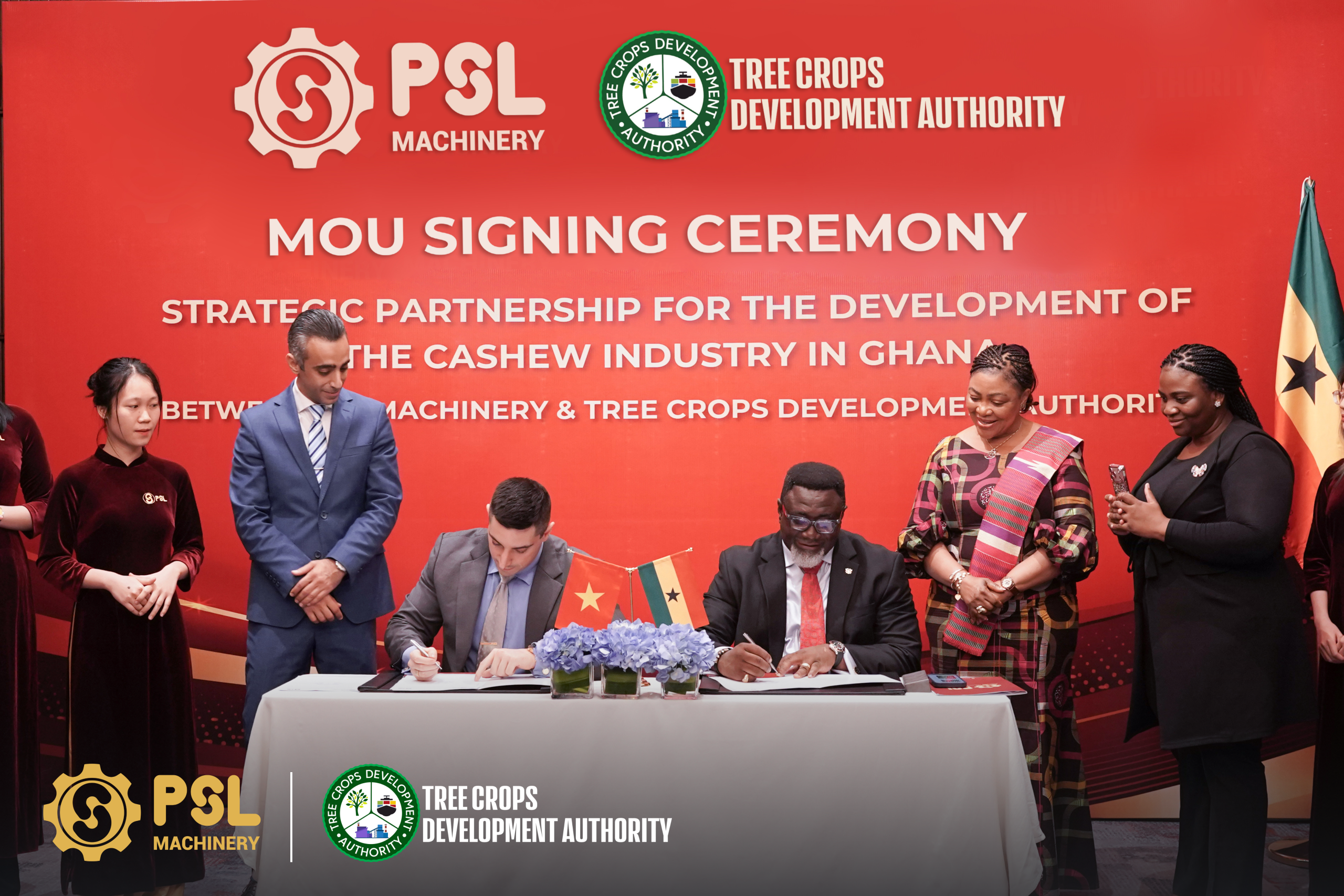
At PSL Machinery, we view China’s latest policy as another milestone in the transformation of Africa’s cashew value chain. With more than 20 years of experience in the global cashew industry, PSL Machinery provides complete A–Z Cashew Factory Solutions designed to help investors build competitive and sustainable processing businesses.
Our Cashew Factory solutions include cashew factory planning and engineering, advanced cashew processing machinery, factory construction, installation and commissioning, workforce training, technology transfer, production optimization, full factory management support, and long-term technical assistance. We also offer exclusive kernel buyback programs that help processors strengthen market access and build sustainable operations. As Africa expands its processing capacity and connects with new international markets, PSL Machinery remains committed to helping processors transform opportunities into long-term business growth.
Conclusion
China’s decision to open its cashew market to all African exporters marks a significant turning point for the global cashew industry. While easier market access creates new export opportunities, long-term success will depend on the ability of processors to deliver consistent quality, efficient production, and internationally compliant products.
For governments, investors, and processors looking to capitalize on this opportunity, building modern and efficient cashew processing factories will be the key to capturing greater value and strengthening Africa’s role in the global cashew supply chain.
Looking to build an export-ready cashew processing factory? Contact PSL Machinery today to discover our complete A–Z Cashew Factory Solutions.
FAQ
1. Why did China open its cashew market to African exporters?
China introduced a unified import framework that allows all African countries with diplomatic relations to export cashew products, provided they meet inspection, quarantine, and food safety requirements
2. How will China’s new policy benefit African cashew exporters?
The policy simplifies market access, expands export opportunities, encourages local processing, and helps African countries capture more value from their cashew production.
3. Why is local cashew processing important for African countries?
Processing cashew nuts locally creates higher-value exports, generates employment, improves farmer incomes, and strengthens the competitiveness of African economies within the global cashew industry.
4. What machinery is required for export-quality cashew processing?
A complete cashew processing line typically includes raw cashew nut cleaning systems, grading equipment, steam cooking units, shelling machines, dryers, humidifiers, peeling machines, color sorters, and packaging systems.
5. How can PSL Machinery support cashew processors?
PSL Machinery provides complete A to Z Cashew Factory Solutions, including factory design, engineering, advanced cashew processing machinery, installation, workforce training, technology transfer, factory management support, and long-term technical assistance.