

Africa Is Becoming the World’s Next Cashew Processing Hub
The global cashew industry is entering a new era. For decades, Africa has been recognized as the world’s largest producer of raw cashew nuts (RCN), supplying more than half of the global harvest each year. Despite this enormous production capacity, most African countries have traditionally exported raw cashew nuts to processing hubs in Asia, where the majority of value addition has taken place through shelling, peeling, grading, packaging, and international distribution.
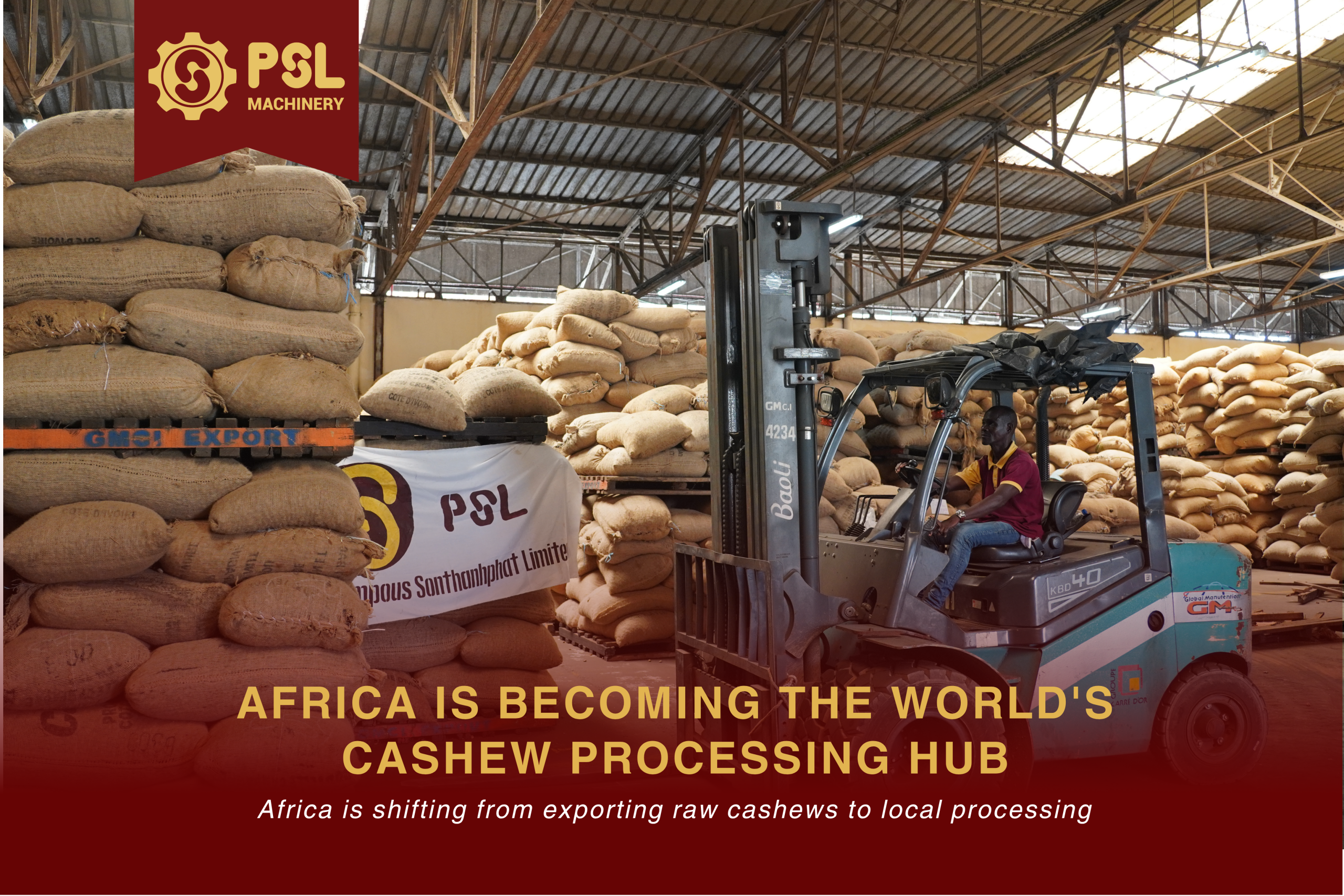
Today, this long-established model is changing rapidly. Countries including Ghana, Côte d’Ivoire, Tanzania, Nigeria, Benin, Burkina Faso, and Mozambique are investing heavily in expanding domestic processing capacity through industrial development programs, public-private partnerships, and investment incentives.
These initiatives are transforming Africa from a supplier of raw agricultural commodities into one of the world’s fastest-growing destinations for cashew processing investment. For investors, this transition is a structural shift in the global cashew value chain that is creating long-term opportunities for companies prepared to invest in modern processing facilities.
Reasons to Invest in a Cashew Processing Factory in Africa
Investing in a cashew processing factory is no longer simply about building a manufacturing business. It is about positioning your company at the center of one of the fastest-growing agricultural value chains in the world. As processing capacity gradually shifts toward producing countries, investors who establish modern factories today are well positioned to benefit from long-term industry growth, increasing international demand, and supportive government policies.

Direct Access to the World’s Largest Raw Cashew Supply
Africa’s greatest competitive advantage is its access to raw materials. The continent produces more than half of the world’s raw cashew nuts every year, providing processors with a reliable and abundant supply of raw materials close to their production facilities.
Establishing a cashew processing factory near growing regions reduces transportation costs, shortens procurement cycles, minimizes post-harvest losses, and enables manufacturers to secure fresher raw cashew nuts throughout the harvesting season. Compared with importing raw materials from overseas, sourcing locally also creates greater flexibility in inventory management while reducing exposure to international logistics disruptions.
For long-term investors, proximity to raw material sources is one of the strongest competitive advantages any processing business can achieve.
Local Processing Creates Far Greater Economic Value
For decades, much of Africa’s cashew industry has relied on exporting raw cashew nuts while the highest-value processing activities have taken place abroad. Producing countries have captured only a small proportion of the total value generated throughout the global cashew supply chain.
Local processing fundamentally changes this model. Instead of exporting raw agricultural commodities, processors can transform raw cashew nuts into premium edible kernels that command significantly higher values in international markets.
Additional value is also created through grading, packaging, branding, and the utilization of by-products such as cashew shell liquid (CNSL) and cashew apples. This integrated value chain increases profitability for processors while simultaneously creating employment opportunities, strengthening local industries, and generating higher income for farming communities. Rather than exporting potential economic value, African countries now have the opportunity to retain it domestically.
International Buyers Are Diversifying Their Supply Chains
Global sourcing strategies are changing. For many years, India and Vietnam have been the leading international cashew processors. While both countries remain major industry leaders, food manufacturers, distributors, and importers are increasingly seeking to diversify their sourcing networks.
Recent global events have highlighted the importance of supply chain resilience, product traceability, and sourcing diversification. Buyers are now placing greater emphasis on securing multiple supply origins that can deliver consistent quality and reliable production.
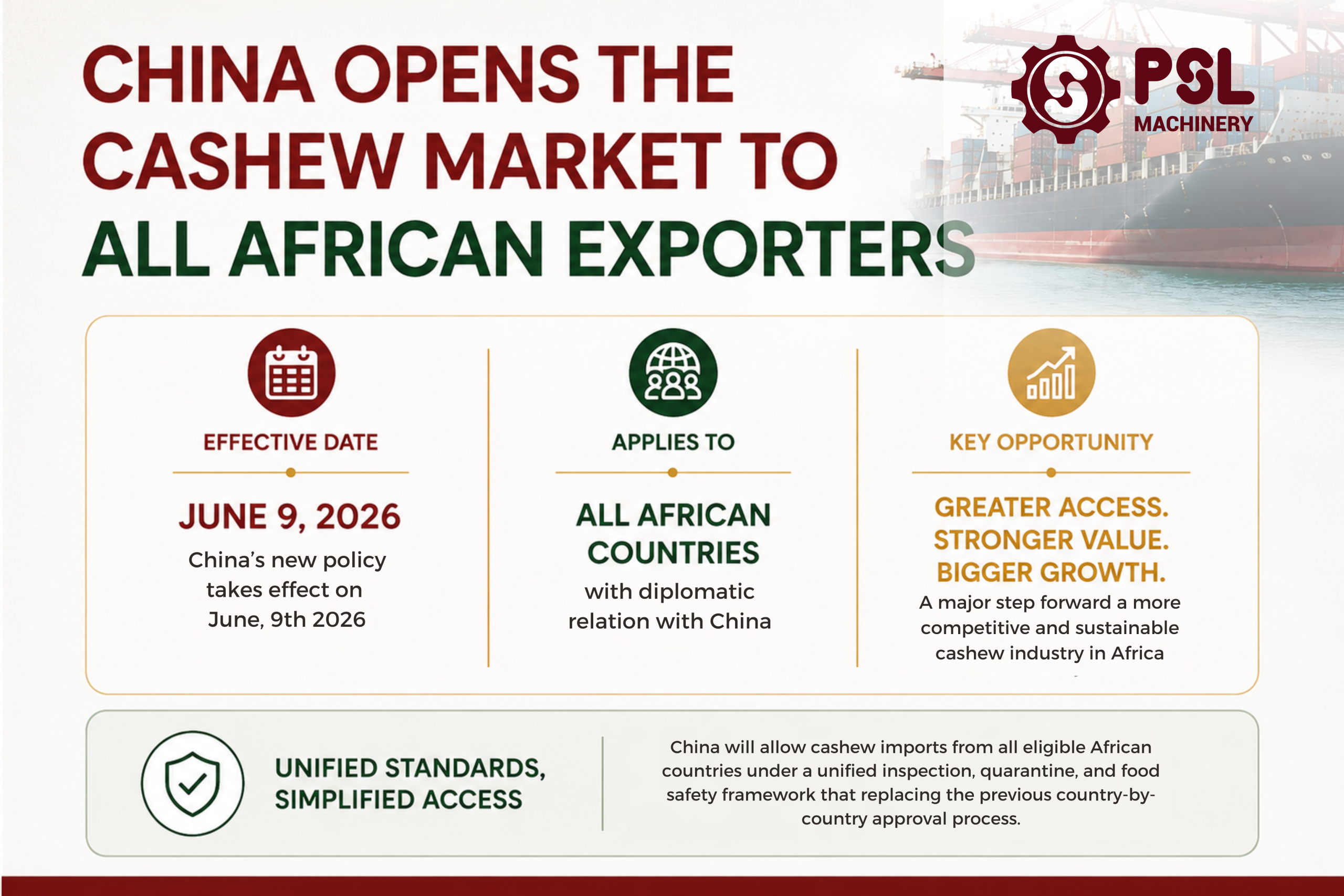
Africa is ideally positioned to respond to these changing market requirements. Cashew factories located close to raw material sources are able to shorten supply chains, improve traceability, strengthen relationships with farming communities, and deliver fresher products to export markets. These advantages are becoming increasingly important for buyers supplying premium retail, food manufacturing, and private-label markets around the world.
The growing interest from international buyers such as China, Europe,… further strengthens the investment case for modern cashew processing facilities across Africa.
A Sustainable Investment for Long-Term Growth
Beyond financial returns, investing in local processing creates lasting economic and social impact. Modern processing cashew factories generate employment opportunities across manufacturing, logistics, engineering, maintenance, quality control, and export operations.
Increased domestic demand for raw cashew nuts helps stabilize farm incomes while encouraging greater agricultural productivity. Processing facilities also contribute to technology transfer, workforce development, industrial modernization, and stronger regional supply chains.
As sustainability becomes an increasingly important consideration for international markets, factories capable of demonstrating responsible sourcing and local value creation will enjoy growing competitive advantages. For investors seeking long-term agribusiness opportunities, few sectors combine commercial potential with developmental impact as effectively as cashew processing in Africa.
It’s the Strategic Timing to Build Your Cashew Processing Factory.
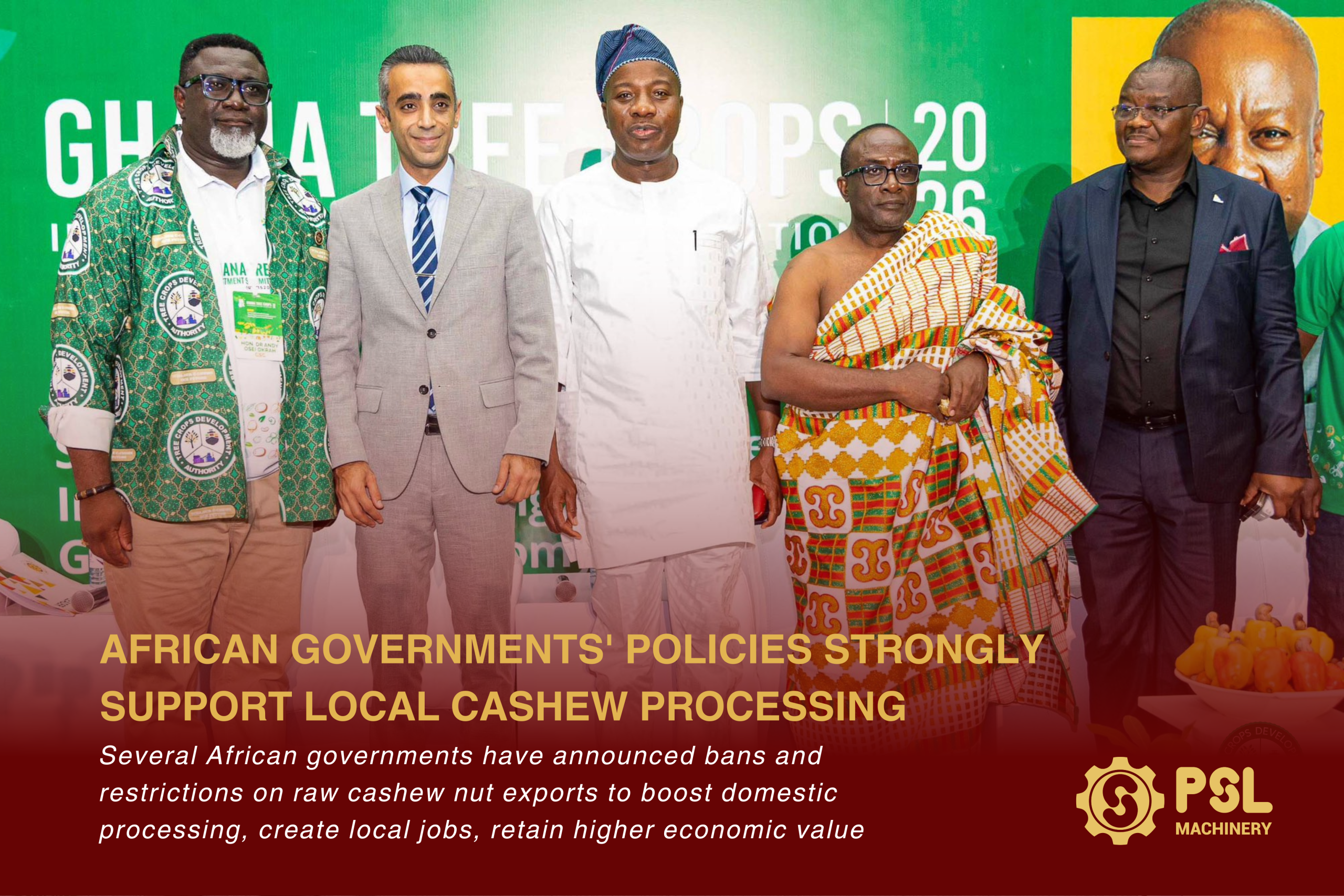
African Government Policies Strongly Support Local Cashew Processing
One of the most important drivers behind Africa’s processing expansion is government policy. Across the continent, governments are actively encouraging investors to establish local processing facilities rather than relying solely on raw cashew exports. Industrial development strategies increasingly prioritize value addition, manufacturing, and export-oriented processing as key components of national economic growth.
Many countries are introducing investment incentives, improving industrial infrastructure, establishing public-private partnerships, and working closely with international technology providers to develop competitive processing industries.
These initiatives are designed to increase export revenues and to create skilled employment, strengthen rural economies, improve food processing capabilities, and reduce dependence on commodity exports. For investors, supportive government policies significantly improve the long-term business environment while reducing many of the risks traditionally associated with industrial investment.
Ghana Moves To End Raw Cashew Exports And Build Domestic Processing Power
Why Africa Offers Exceptional Investment Potential
Africa possesses one advantage that no other processing region can replicate: direct access to raw materials. Every year, farmers harvest millions of tonnes of raw cashew nuts across West and East Africa.
Historically, the majority of these nuts were exported without processing, meaning that the highest-value stages of production have taken place overseas. Local processing changes this equation by allowing investors to capture substantially more value from the same agricultural resource.
Processing raw cashew nuts into export-grade kernels creates opportunities for higher profit margins while reducing transportation costs associated with shipping unprocessed products abroad.
It also enables cashew factories to establish closer relationships with farming communities, improve raw material traceability, and respond more efficiently to international buyer requirements.
Growing demand for sustainably sourced agricultural products further strengthens Africa’s competitive position. Buyers increasingly prefer suppliers capable of demonstrating transparent supply chains and responsible sourcing practices. Processing directly within producing countries makes these objectives considerably easier to achieve.
How to Build a Profitable Cashew Processing Factory in Africa (2026 Guide from PSL Machinery)

The priority is evaluating the long-term availability of raw cashew nuts within the chosen production region. Reliable access to high-quality raw materials determines production continuity and ultimately influences factory profitability. Investors must also establish an appropriate production capacity based on available capital, expected market demand, and future expansion plans. Selecting the correct level of automation is equally important, balancing investment costs against labor availability, productivity objectives, and long-term operating efficiency.
Click to read the full guideline about How to build cashew processing factory in Africa: https://pslmachinery.com/how-to-build-cashew-processing-factory-in-africa/
Cashew Factory design plays a critical role in production performance. A well-planned layout minimizes unnecessary material handling, improves workflow, enhances worker safety, and allows future expansion without major operational disruption.
Working capital requirements are very important. Beyond cashew factory construction and cashew machinery investment, processors require sufficient financial resources. Finally, investors must develop a comprehensive commercial strategy that includes customer acquisition, export market development, quality certification, and long-term brand positioning. Sustainable success depends not only on producing kernels but also on consistently accessing profitable international markets.
Investors Partner with PSL Machinery
Building a successful cashew processing factory requires an experienced partner capable of supporting every stage of the investment journey.
With more than 20 years of experience across the global cashew industry, PSL Machinery provides complete A–Z Cashew Factory Solutions that enable investors to establish efficient, profitable, and sustainable processing facilities.
Our services begin with feasibility studies, investment consulting, site surveys, and factory layout planning before extending to engineering design, steel building construction, advanced cashew processing machinery, installation, commissioning, workforce training, and technology transfer.
Unlike conventional machinery suppliers, PSL Machinery continues to support clients long after installation is completed.
Beyond individual projects, PSL Machinery works directly with governments and public institutions to strengthen processing capacity across Africa. Through strategic partnerships in countries including Ghana and Tanzania, alongside ongoing collaboration opportunities in Côte d’Ivoire, Nigeria, and other producing nations, we are helping accelerate the development of a stronger and more competitive African cashew industry.

Ready to Invest in a Cashew Processing Factory in Africa?
Whether you are an investor, agribusiness company, government agency, or existing processor seeking to expand your operations, PSL Machinery provides complete A–Z Cashew Factory Solutions tailored to your investment objectives.
Contact PSL Machinery today and discover how we can help you build your cashew processing factory in Africa.