

The ongoing blockade of the Strait of Hormuz is sending shockwaves across global trade, with oil prices projected to remain above $100 per barrel through 2027. For the cashew industry, this is not a short-term disruption; it is a structural challenge affecting the entire cashew value chain.
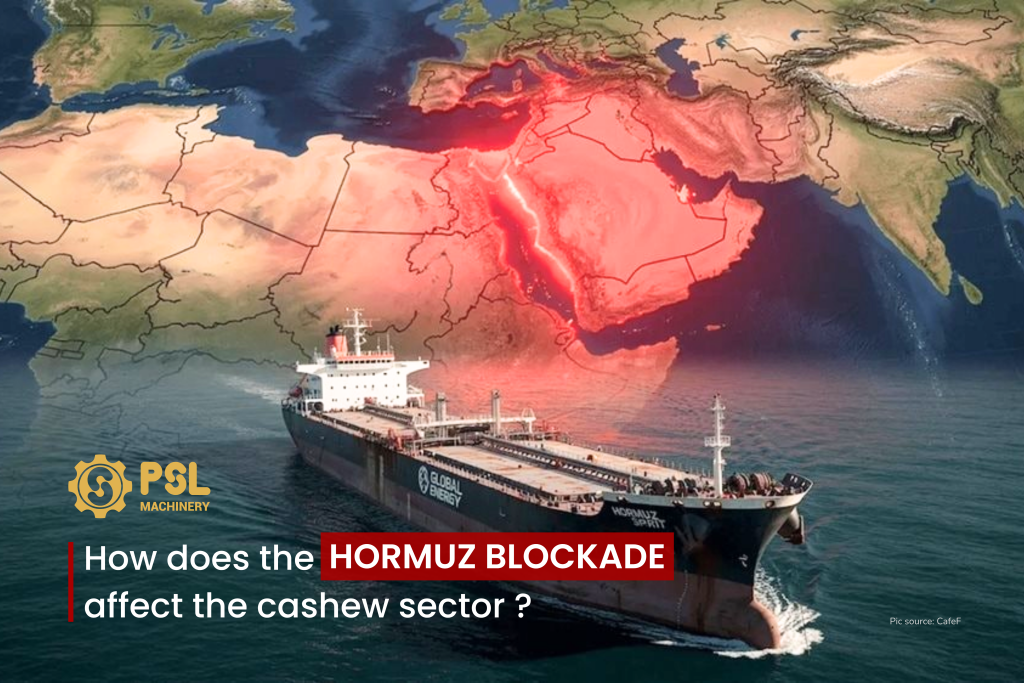
As fuel prices surge, logistics costs increase significantly, making it more difficult for raw cashew nuts (RCN) to be transported and exported to consumer markets. Furthermore, in many producing countries, especially across Africa, prolonged delays in processing can lead to serious quality deterioration. Without timely processing or proper storage infrastructure, raw cashew nuts risk spoilage, directly impacting export value and causing substantial economic losses.
At the same time, rising energy costs are putting immense pressure on processors. From farm-level operations to factory production, much of the cashew value chain still depends heavily on fossil fuels. For processors already operating on tight margins, this creates a growing risk of reduced competitiveness in global markets.
With no clear relief in oil prices expected in the near future, the industry is facing a critical turning point. The key question is: How can cashew processors adapt and build resilience in an increasingly volatile global environment?
At PSL Machinery, we believe the answer lies in localized processing, energy-efficient factory design, and advanced processing technologies that reduce dependency on external risks and optimize operational performance.
Stay tuned for the next part of this series to explore deeper insights and strategic solutions for the future of the cashew industry amid escalating geopolitical tensions!